

The Most In-Demand Cisco 200-301 Pass Guaranteed Quiz
New Version 200-301 Certificate & Helpful Exam Dumps is Online
To prepare for the Cisco 200-301 certification exam, candidates can take instructor-led training courses, self-paced online courses, virtual labs, and practice exams. Cisco recommends that candidates have at least one year of networking experience before taking the exam. Candidates can also join the Cisco Learning Network, a community of IT professionals who share knowledge and resources related to Cisco technologies and certifications.
Cisco 200-301 Exam Topics:
| Section | Weight | Objectives |
|---|---|---|
| Security Fundamentals | 15% | 1.Define key security concepts (threats, vulnerabilities, exploits, and mitigation techniques) 2.Describe security program elements (user awareness, training, and physical access control) 3.Configure device access control using local passwords 4.Describe security password policies elements, such as management, complexity, and password alternatives (multifactor authentication, certificates, and biometrics) 5.Describe remote access and site-to-site VPNs 6.Configure and verify access control lists 7.Configure Layer 2 security features (DHCP snooping, dynamic ARP inspection, and port security) 8.Differentiate authentication, authorization, and accounting concepts 9.Describe wireless security protocols (WPA, WPA2, and WPA3) 10.Configure WLAN using WPA2 PSK using the GUI |
| IP Services | 10% | 1.Configure and verify inside source NAT using static and pools 2.Configure and verify NTP operating in a client and server mode 3.Explain the role of DHCP and DNS within the network 4.Explain the function of SNMP in network operations 5.Describe the use of syslog features including facilities and levels 6.Configure and verify DHCP client and relay 7.Explain the forwarding per-hop behavior (PHB) for QoS such as classification, marking, queuing, congestion, policing, shaping 8.Configure network devices for remote access using SSH 9.Describe the capabilities and function of TFTP/FTP in the network |
| Network Fundamentals | 20% | 1.Explain the role and function of network components
2.Describe characteristics of network topology architectures
3.Compare physical interface and cabling types
4.Identify interface and cable issues (collisions, errors, mismatch duplex, and/or speed)
10.Verify IP parameters for Client OS (Windows, Mac OS, Linux)
12.Explain virtualization fundamentals (virtual machines)
|
How to Prepare For 200-301 CCNA Exam: Cisco Certified Network Associate
Preparation Guide for 200-301 CCNA Exam: Cisco Certified Network Associate
Introduction to 200-301 CCNA Exam: Cisco Certified Network Associate
This exam is for a networking career through how networks operate. This exam introduces architectures, models, protocols, and networking elements - functions needed to support the operations and priorities of mid-sized to large companies and to small innovative retailers. You will get the chance to build simple local area networks (LANs) yourself. You will also get a working knowledge of IP addressing schemes, foundational network security, and be able to perform basic configurations for routers and switches.
This exam tests a candidate's knowledge and skills related to network fundamentals, network access, IP connectivity, IP services, security fundamentals, and automation and programmability.
NEW QUESTION # 134
Refer to the exhibit.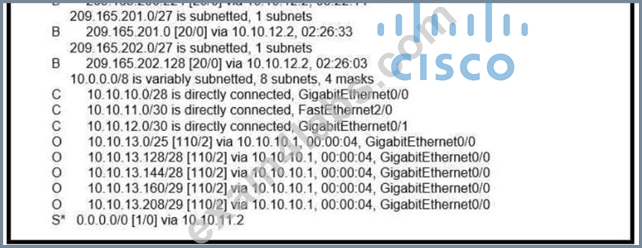
Drag and drop the prefix lengths from the left onto the corresponding prefixes on the right Not all prefixes are used see the answer below.
Answer:
Explanation:
Diagram Description automatically generated with low confidence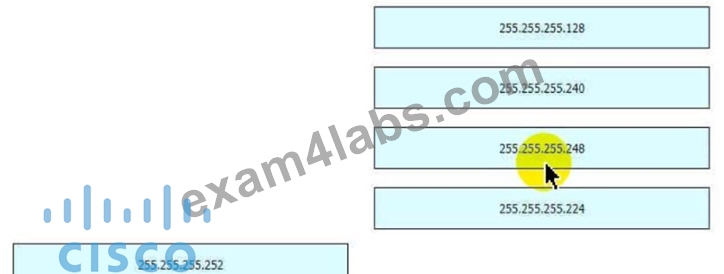
NEW QUESTION # 135
Refer to the exhibit.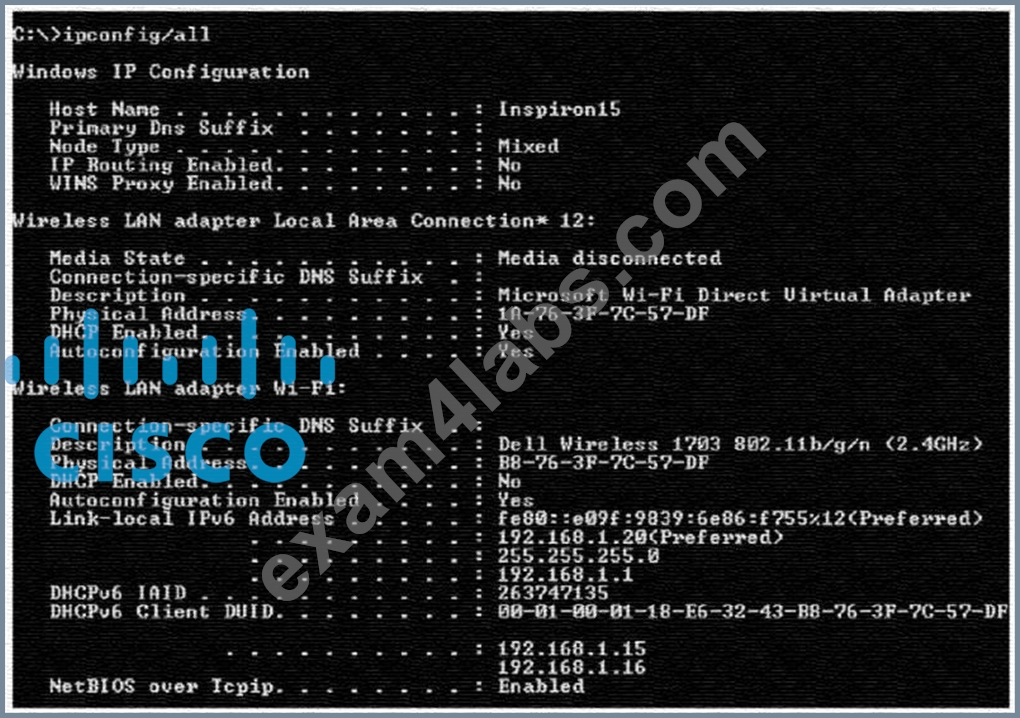
An engineer is required to verify that the network parameters are valid for the users wireless LAN connectivity on a /24 subnet. Drag and drop the values from the left onto the network parameters on the right.
Not all values are used.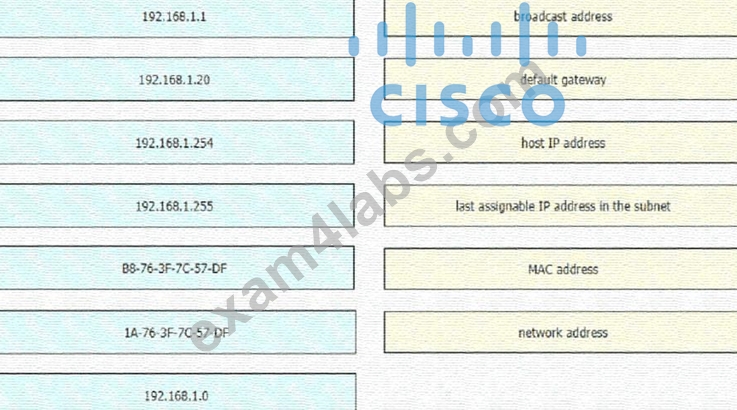
Answer:
Explanation: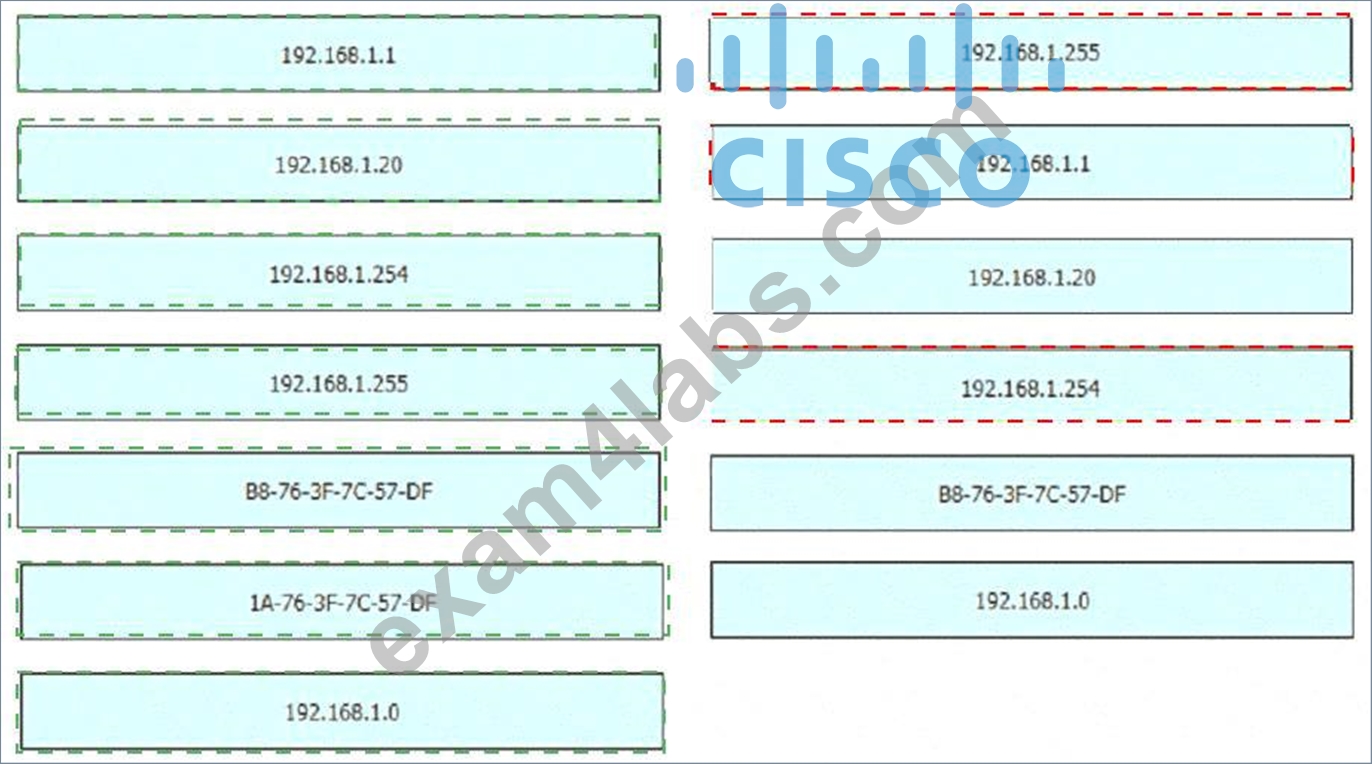
Explanation: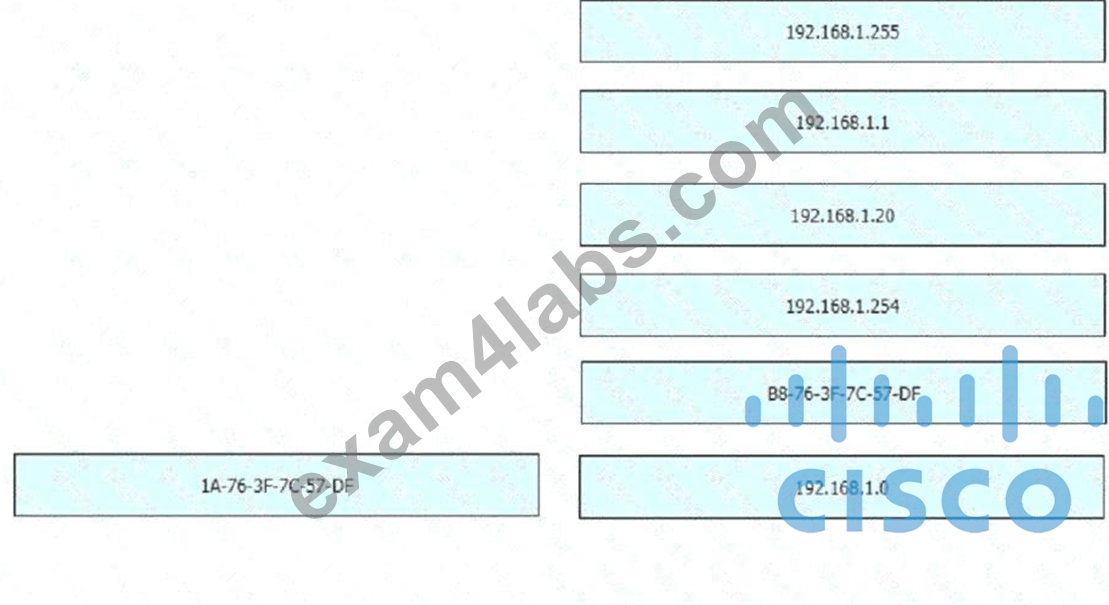
NEW QUESTION # 136
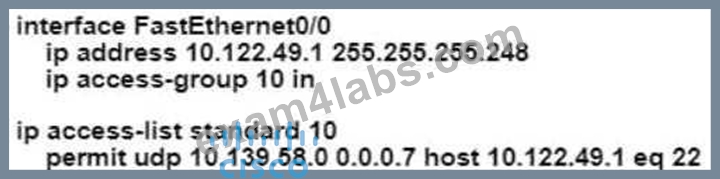
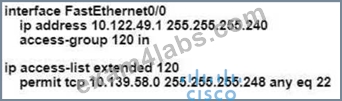
An engineer is configuring remote access to a router from IP subnet 10.139.58.0/28.
The domain name, crypto keys, and SSH have been configured.
Which configuration enables the traffic on the destination router?
- A.
- B.
- C.
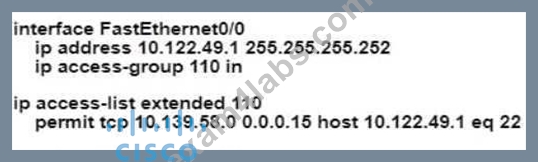
- D.
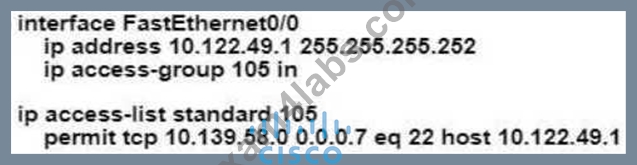
Answer: C
NEW QUESTION # 137
Drag and drop the SNMP components from the left onto the descriptions on the right.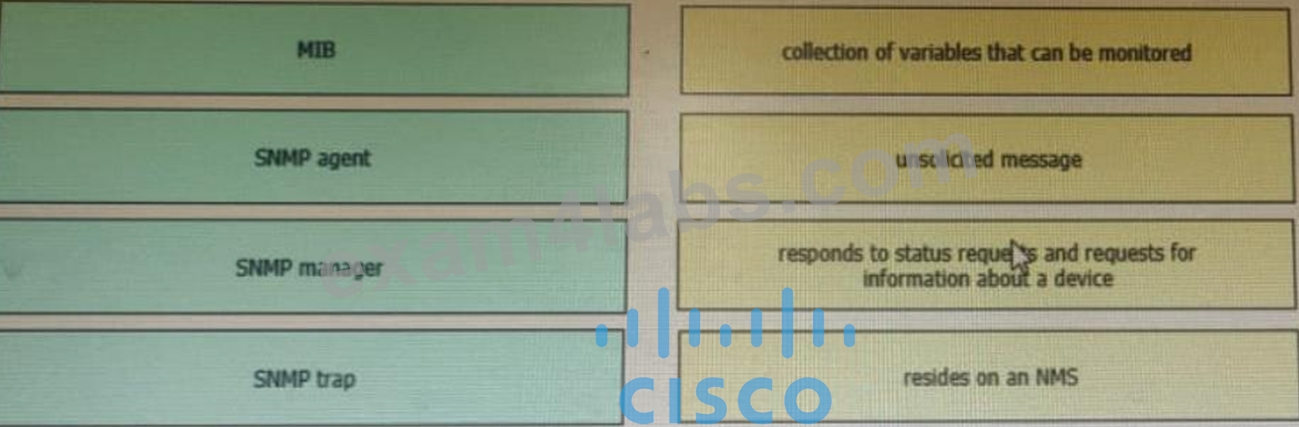
Answer:
Explanation: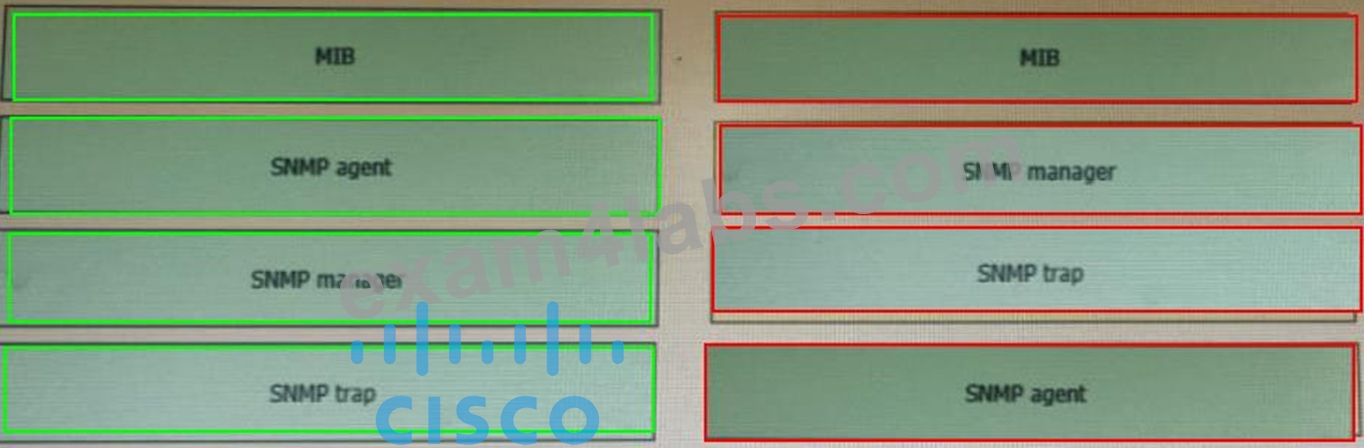
NEW QUESTION # 138
Refer to the exhibit.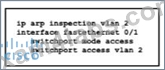
What is the effect of this configuration?
- A. Dynamic ARP inspection is disabled because the ARP ACL is missing
- B. The switch port interface trust state becomes untrusted
- C. The switch port remains down until it is configured to trust or untrust incoming packets
- D. The switch port remains administratively down until the interface is connected to another switch
Answer: B
Explanation:
Dynamic ARP inspection (DAI) is a security feature that validates ARP packets in a network. It intercepts, logs, and discards ARP packets with invalid IP-to-MAC address bindings. This capability protects the network from certain man-in-the-middle attacks. After enabling DAI, all ports become untrusted ports.
NEW QUESTION # 139
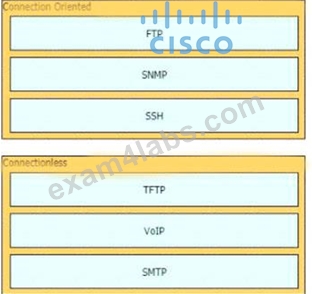
Drag and drop the network protocols from the left onto the correct transport services on the right.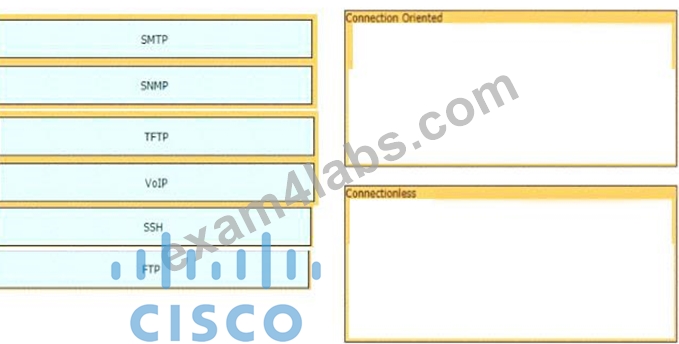
Answer:
Explanation: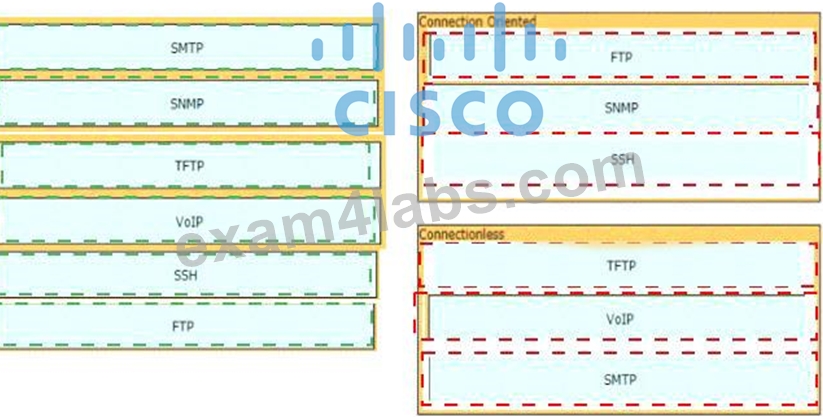
NEW QUESTION # 140
What causes a port to be placed in the err-disabled state?
- A. latency
- B. port security violation
- C. nothing plugged into the port
- D. shutdown command issued on the port
Answer: B
Explanation:
This mode is the default violation mode; when in this mode, the switch will automatically force the switchport into an error disabled (err-disable) state when a violation occurs. While in this state, the switchport forwards no traffic. The switchport can be brought out of this error disabled state by issuing the errdisable recovery cause CLI command or by disabling and reenabling the switchport.
NEW QUESTION # 141
Drag and drop the configuration management terms from the left onto the descriptions on the right. Not all terms are used.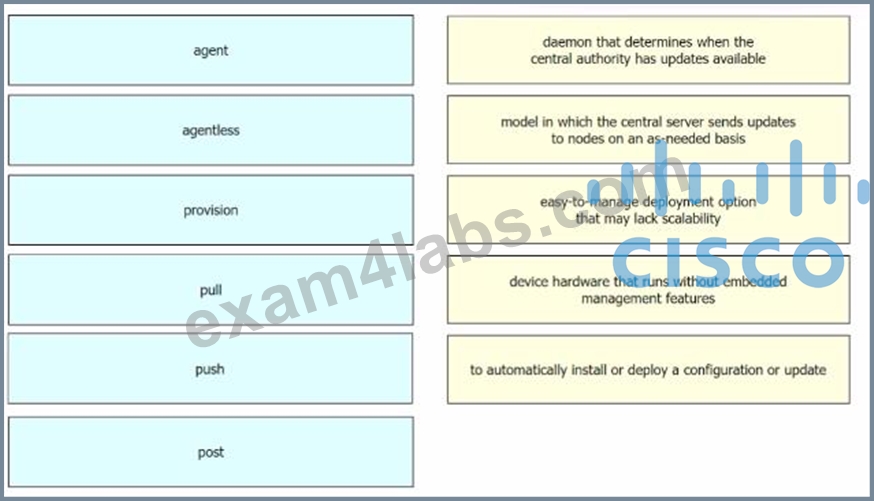
Answer:
Explanation: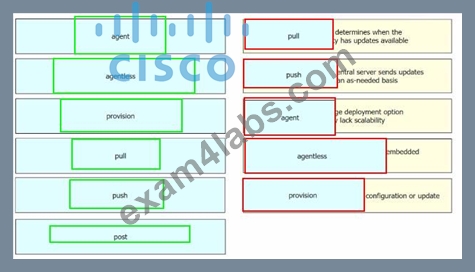
NEW QUESTION # 142
Which action must be taken to assign a global unicast IPv6 address on an interface that is derived from the MAC address of that interface?
- A. configure a stateful DHCPv6 server on the network
- B. disable the EUI-64 bit process
- C. explicitly assign a link-local address
- D. enable SLAAC on an interface
Answer: D
Explanation:
Section: Network Fundamentals
NEW QUESTION # 143
Which action must be taken to assign a global unicast IPv6 address on an interface that is derived from the MAC address of that interface?
- A. disable the EUI-64 bit process
- B. configure a stateful DHCPv6 server on the network
- C. explicitly assign a link-local address
- D. enable SLAAC on an interface
Answer: B
NEW QUESTION # 144
Refer to the exhibit.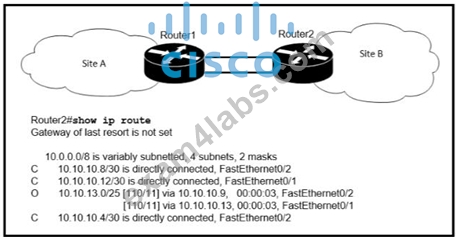
If OSPF is running on this network, how does Router 2 handle traffic from Site B to 10.10.13/25 at Site A?
- A. It sends packets out of interface Fa0/1 only.
- B. It cannot send packets to 10.10.13 128/25
- C. It sends packets out of interface Fa0/2 only.
- D. It load-balances traffic out of Fa0/1 and Fa0/2
Answer: B
Explanation:
Router2 does not have an entry for the subnet 10.10.13.128/25. It only has an entry for 10.10.13.0/25, which ranges from 10.10.13.0 to 10.10.13.127.
https://study-ccna.com/administrative-distance-metric/
NEW QUESTION # 145
Refer to the exhibit. Which statement about the interface that generated the output is true?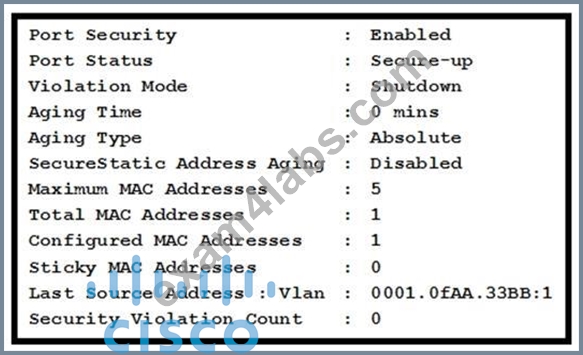
- A. One secure MAC address is manually configured on the interface.
- B. A syslog message is generated when a violation occurs.
- C. One secure MAC address is dynamically learned on the interface.
- D. Five secure MAC addresses are dynamically learned on the interface.
Answer: A
NEW QUESTION # 146
Drag the descriptions of IP protocol transmissions from the left onto the IP traffic types on the right.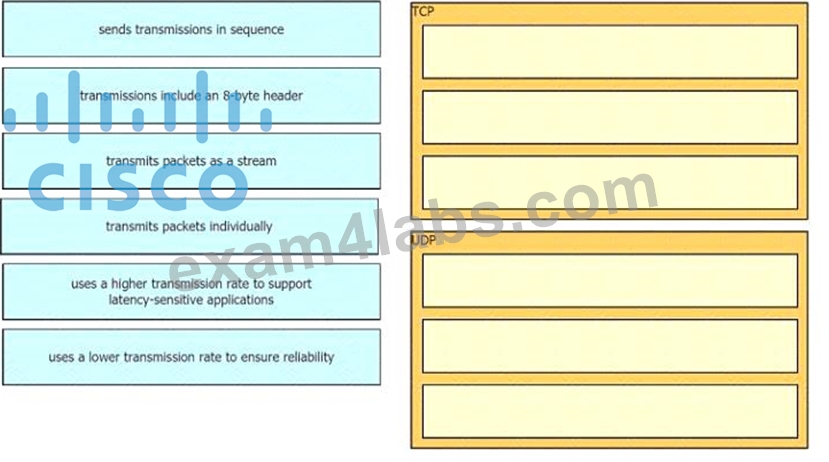
Answer:
Explanation: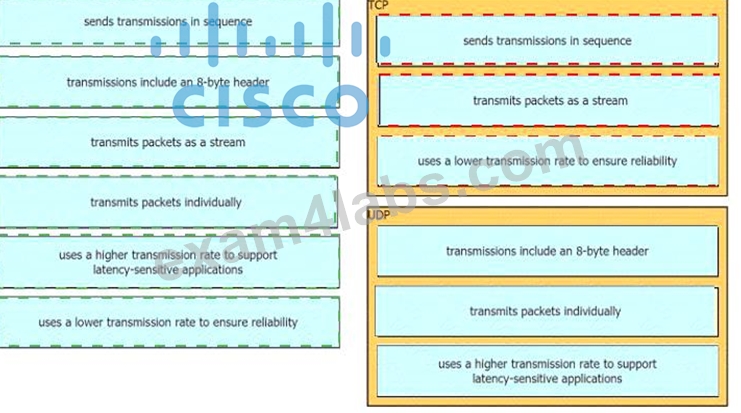
Explanation: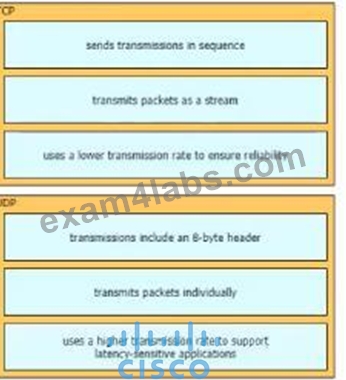
NEW QUESTION # 147
Refer to the exhibit.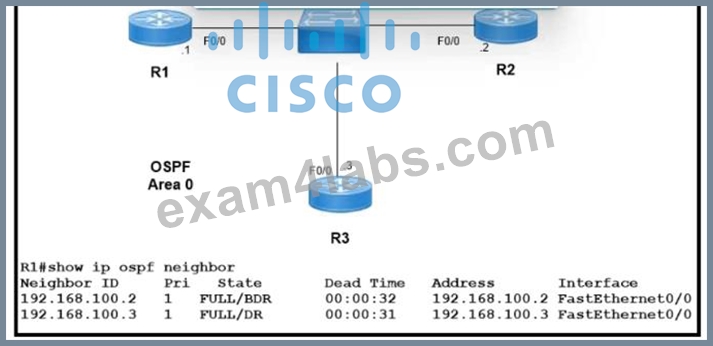
Which two configurations must the engineer apply on this network so that R1 becomes the DR? (Choose two.)
- A.

- B.

- C.

- D.

- E.

Answer: B,C
NEW QUESTION # 148
Refer to Exhibit.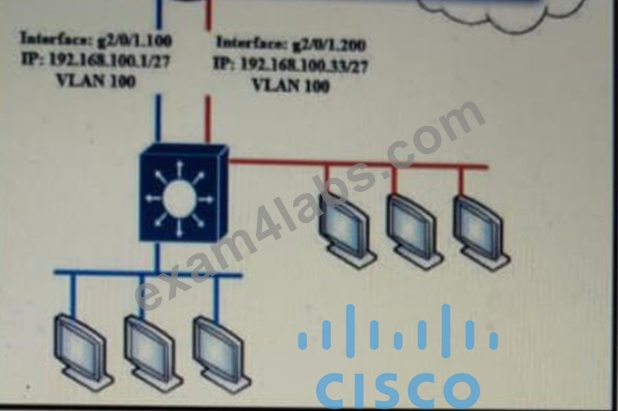
Which configuration must be applied to the router that configures PAT to translate all addresses in VLAN 200 while allowing devices on VLAN 100 to use their own IP addresses?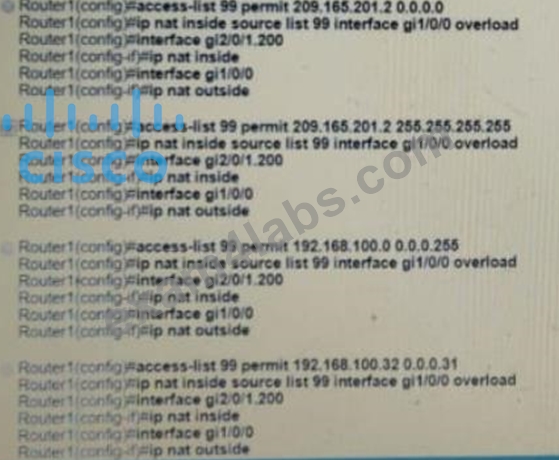
- A. Option A
- B. Option C
- C. Option B
- D. Option D
Answer: D
NEW QUESTION # 149
Refer to the exhibit.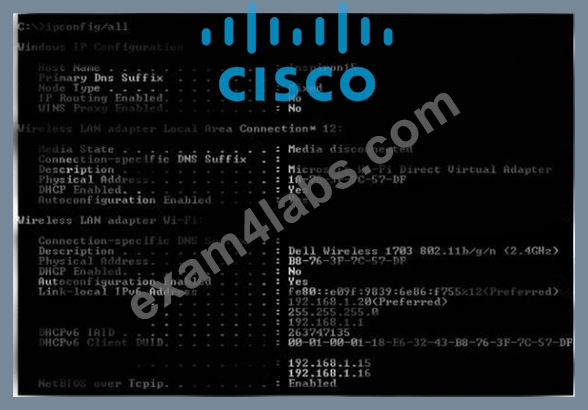
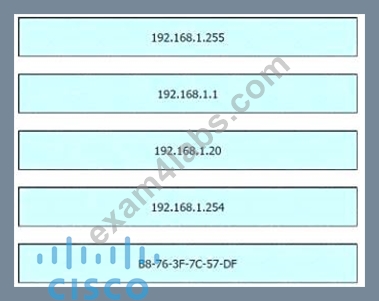
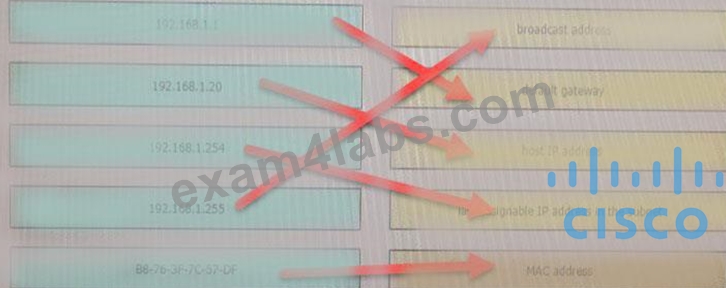
An engineer is tasked with verifying network configuration parameters on a client workstation to report back to the team lead. Drag and drop the node identifiers from the left onto the network parameters on the right.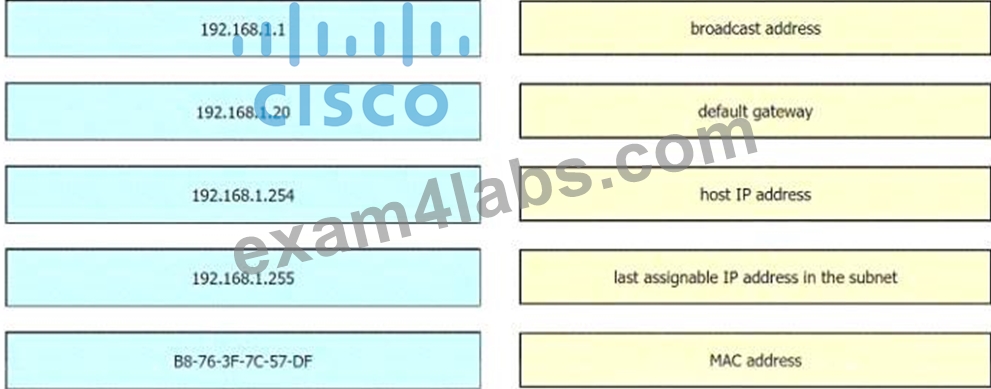
Answer:
Explanation: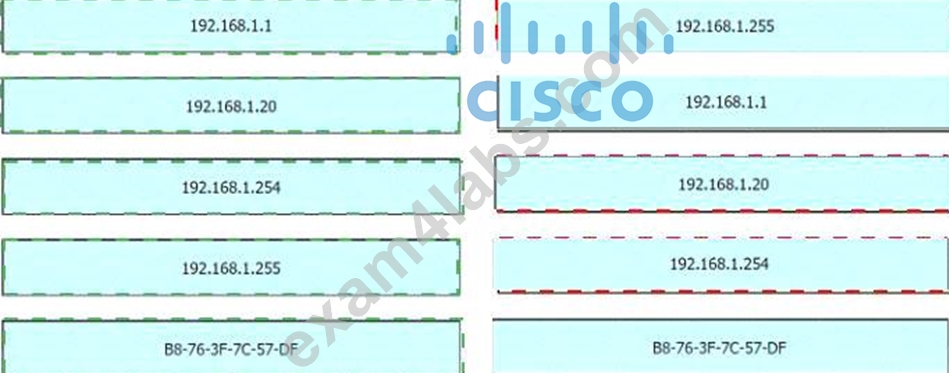
NEW QUESTION # 150
Refer to Exhibit.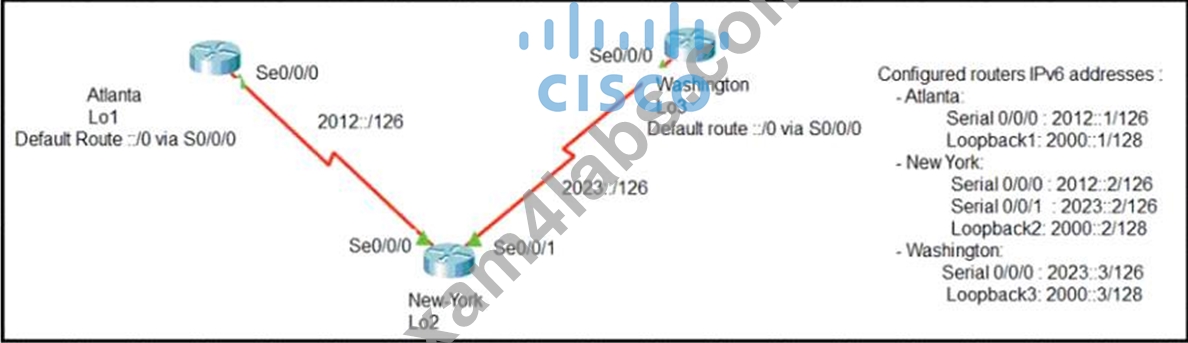
The loopback1 interface of the Atlanta router must reach the loopback3 interface of the Washington router.
Which two static host routes must be configured on the NEW York router? (Choose two)
- A. ipv6 route 2000::3/128 s0/0/0
- B. ipv6 route 2000::1/128 s0/0/1
- C. ipv6 route 2000::3/128 2023::3
- D. ipv6 route 2000::1/128 2012::2
- E. ipv6 route 2000::1/128 2012::1
Answer: C,E
NEW QUESTION # 151
Drag and drop the functions from the left onto the correct network components on the right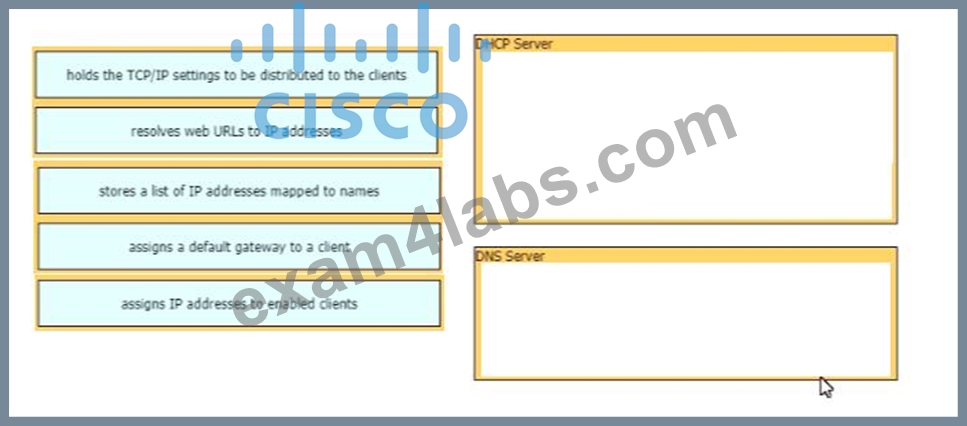
Answer:
Explanation: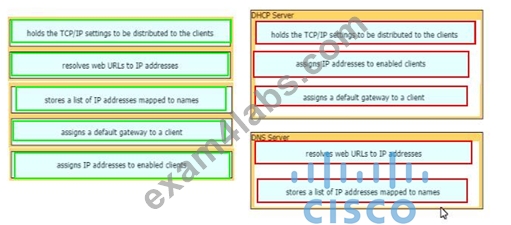
NEW QUESTION # 152
......
200-301 Free Certification Exam Material with 1031 Q&As : https://www.exam4labs.com/200-301-practice-torrent.html
UPDATED 200-301 Exam Questions Certification Test Engine to PDF: https://drive.google.com/open?id=1T5tg-MtqQJMwkM-re9kKG11cPzjcSx9J